If you have been following our tutorials at Spectre Academy, you know we constantly preach the importance of parallel processing for bass. In modern metal, you cannot simply throw a single amp sim on a DI track and expect it to survive against a wall of quad-tracked guitars.
You need a clean low-end, a gritty midrange, and a crisp top-end—all processed separately.
Usually, teaching this concept involves explaining complex routing, aux tracks, and phase alignment. But recently, Gear Gods released a review of Element Bass that serves as a perfect demonstration of why this “split-processing” approach is superior.
The “Nightmare” of Mixing Bass
In the review, Gear Gods explicitly discusses the “nightmare” of trying to get a bass guitar to sit in a heavy mix. They pinpoint the exact problem many students face: fighting for frequency space.
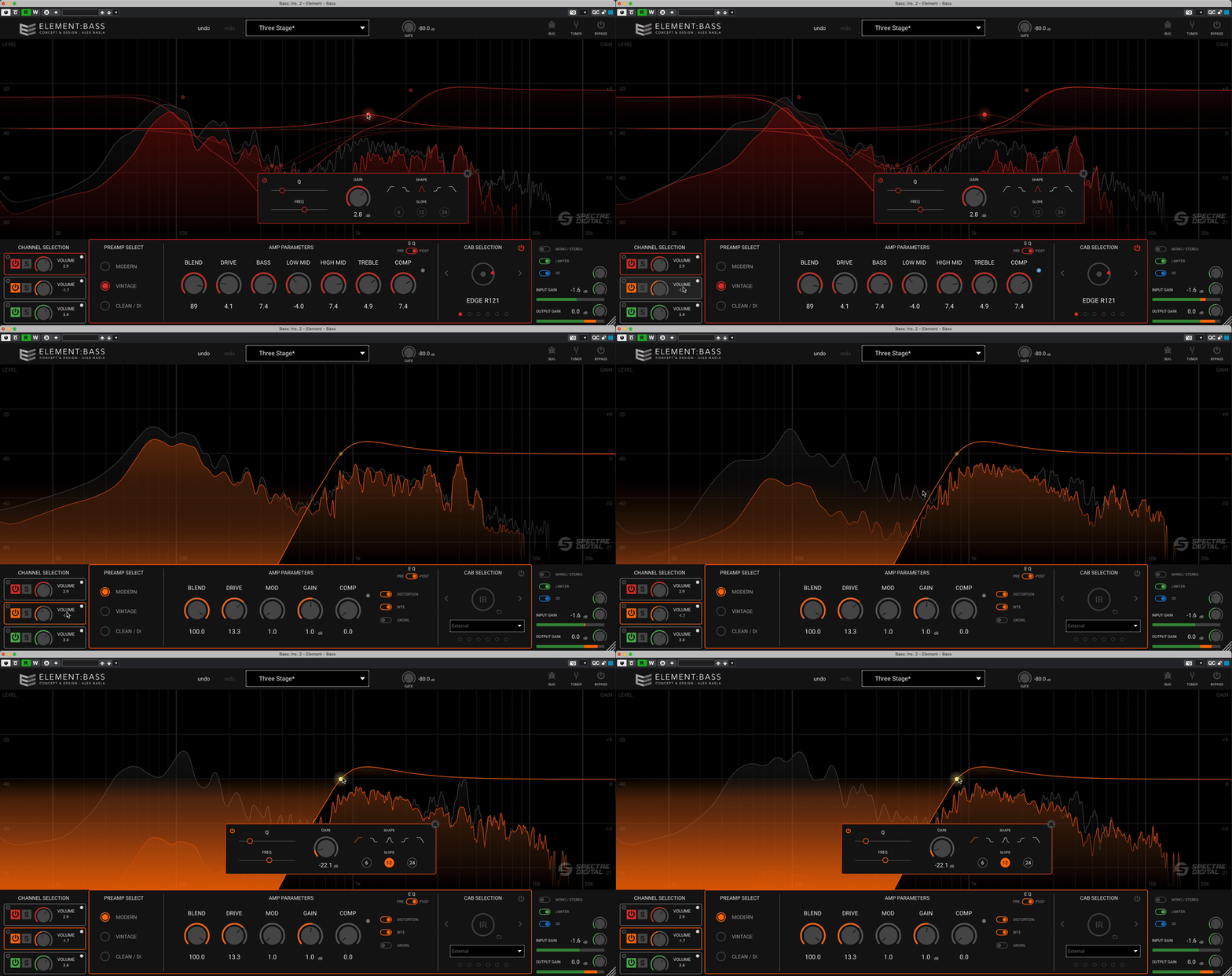
The review is worth watching not just to see the plugin, but to understand the theory behind the workflow. They break down how Element Bass mimics the “Andy Sneap” style of production—splitting the signal into three distinct bands (Lows, Mids, Highs) to solve mix issues before they happen.
Key Takeaways for Producers
Here is what you should look out for when you read their analysis:
The Power of Crossovers: Gear Gods highlights the importance of the internal crossovers. By keeping the sub-frequencies clean and compressing them separately from the distorted mids, you avoid the “mud” that kills amateur mixes.
Surgical EQ: Note how they mention the parametric EQ on every channel. This is a crucial lesson in mixing: you don’t just EQ the bass bus; you need to EQ the distortion differently than you EQ the sub.
Workflow Velocity: They describe the plugin as a “production necessity” because it removes the technical barriers. It allows you to focus on the sound rather than the routing.
A Lesson in Modern Tone
Whether you own Element Bass or not, the review is a great case study in what constitutes a “mix-ready” sound in 2024. It validates the techniques we teach here at the Academy: separation, control, and saturation.
If you want to see exactly how a pro analyzes a bass chain and what they listen for in a top-tier tone, check out the full review below.
READ THE FULL BREAKDOWN ON GEAR GODS »